Perceptum Gameplay: The Mirror, Listening and Investigation
Perceptum’s mirror reveals hidden traces, while closing your eyes lets whispers guide you through a linear house investigation with no combat.
How does Perceptum’s investigation gameplay work?
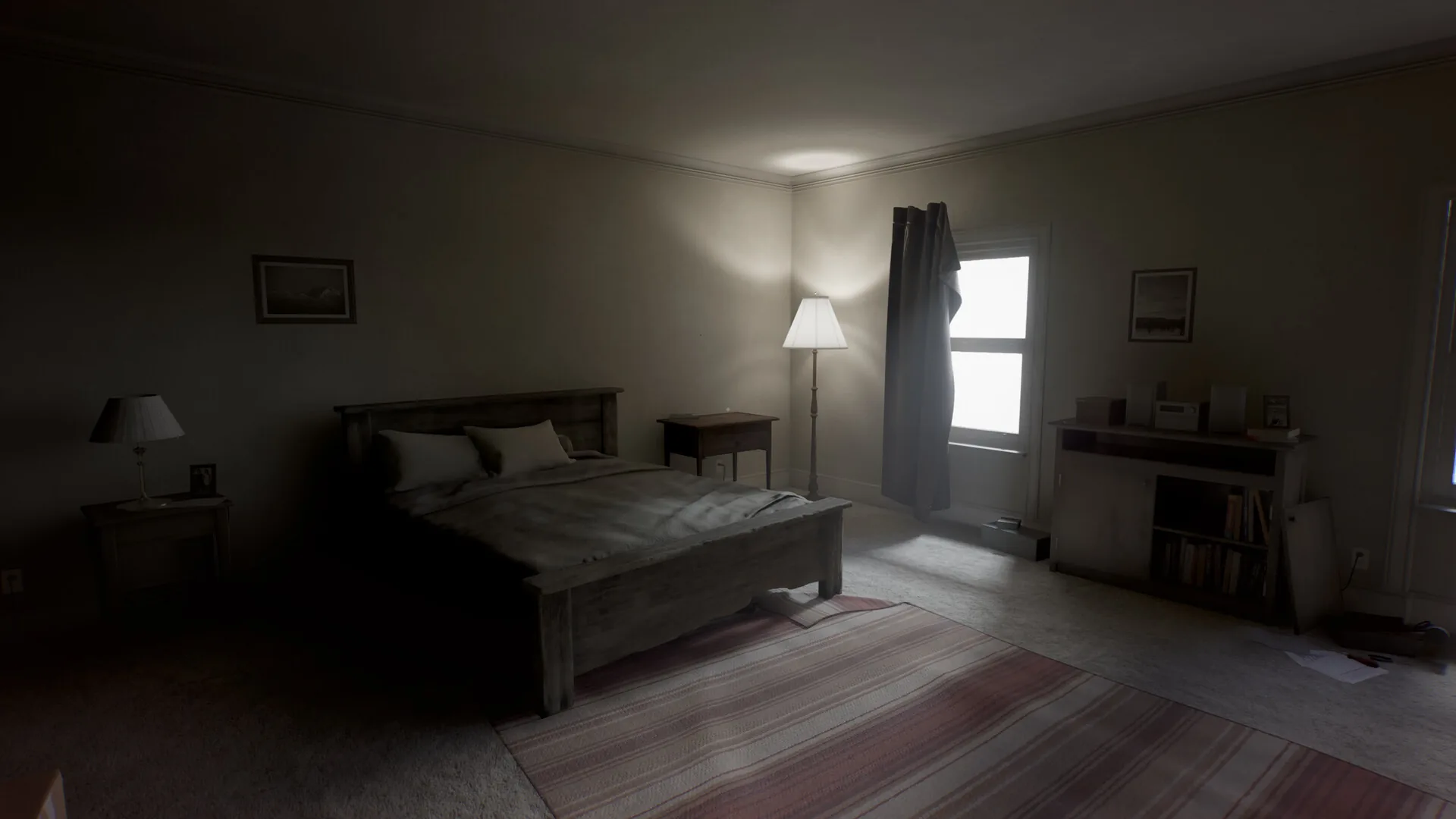
Perceptum casts you as a medium investigating a family’s disappearance through house exploration, clues and puzzles in a linear psychological horror experience. Your mirror reveals things ordinary sight misses, while closing your eyes lets you follow altered sounds and distant whispers at the cost of leaving you vulnerable.
The family vanished shortly after moving into its new home. The police eventually abandoned the case, leaving your character to enter the house and uncover what happened. Duck Reaction’s description makes uncertainty central to that investigation: familiar rooms feel wrong, silence becomes oppressive, and your senses become difficult to trust.
The current full-game description estimates around 4–5 hours. That is the developer’s planned length for the complete experience, separate from the shorter early demo.
Quick reference
The investigation uses observation, supernatural sight and listening, with no way to fight back when a threat appears.
| Element | What it does | What to remember |
|---|---|---|
| House exploration | Leads you through a linear investigation involving clues and puzzles | Pay attention to environmental details |
| Mirror | Reveals hidden traces and disturbing reflections | Some information is invisible to ordinary sight |
| Closing your eyes | Makes altered sounds and distant whispers your guide | The character becomes vulnerable |
| Threats | Interrupt the investigation with moments of fear | Fighting back is unavailable |
| Early Windows demo mirror input | Holding the mouse button brings up the mirror | A brief click can produce its sound without displaying it |
How do exploration, clues and puzzles work?
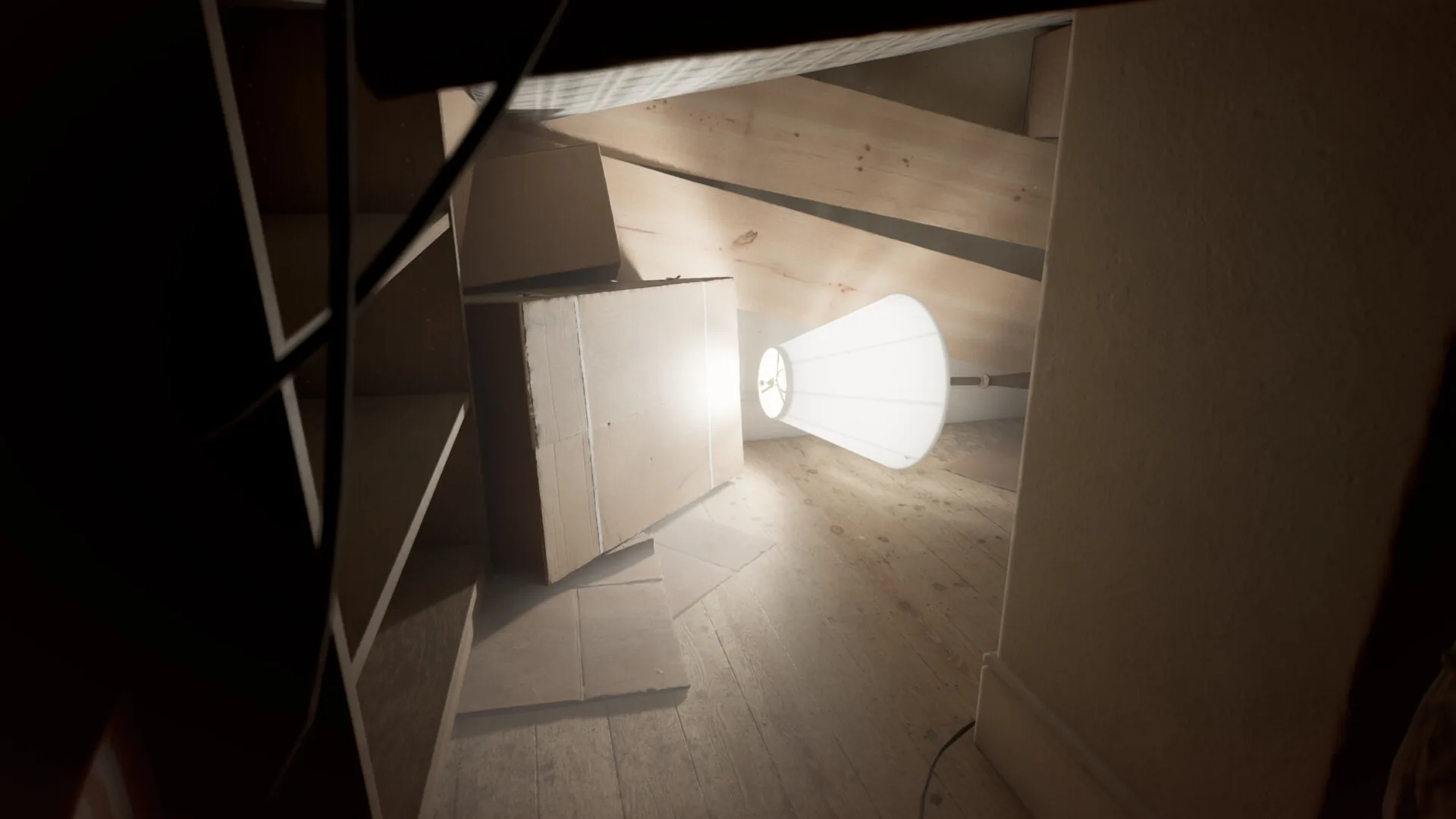
Exploration involves searching the family’s house for clues and solving puzzles along a linear route through the mystery. According to the official Steam description, your senses help guide this process.
The house serves as both the setting of the disappearance and the space you must investigate. The description emphasizes odd halls, unsettling familiar spaces and the impression that something remains just outside your view. Looking closely is therefore part of the stated approach: Duck Reaction specifically encourages players to remain calm and notice details.
The supernatural tools support that search for information. Ordinary sight gives you one view of a room; the mirror can expose traces absent from that view; listening with closed eyes gives you another way to find your direction. Prepare to notice what each method reveals rather than relying on visual inspection alone.
“Linear” describes the announced structure of the experience. Steam’s description does not explain individual puzzle solutions, the order of rooms, or how particular clues connect. It establishes an investigation built around searching and perception, but it does not provide a walkthrough.
The house also reacts to your presence. Duck Reaction describes tension shifting between quiet, oppressive stretches and more intense fear, so the investigation includes both sustained unease and sudden confrontations. The feeling of being watched is part of that atmosphere even before something becomes visible.
What does the mirror reveal, and how do you use it?
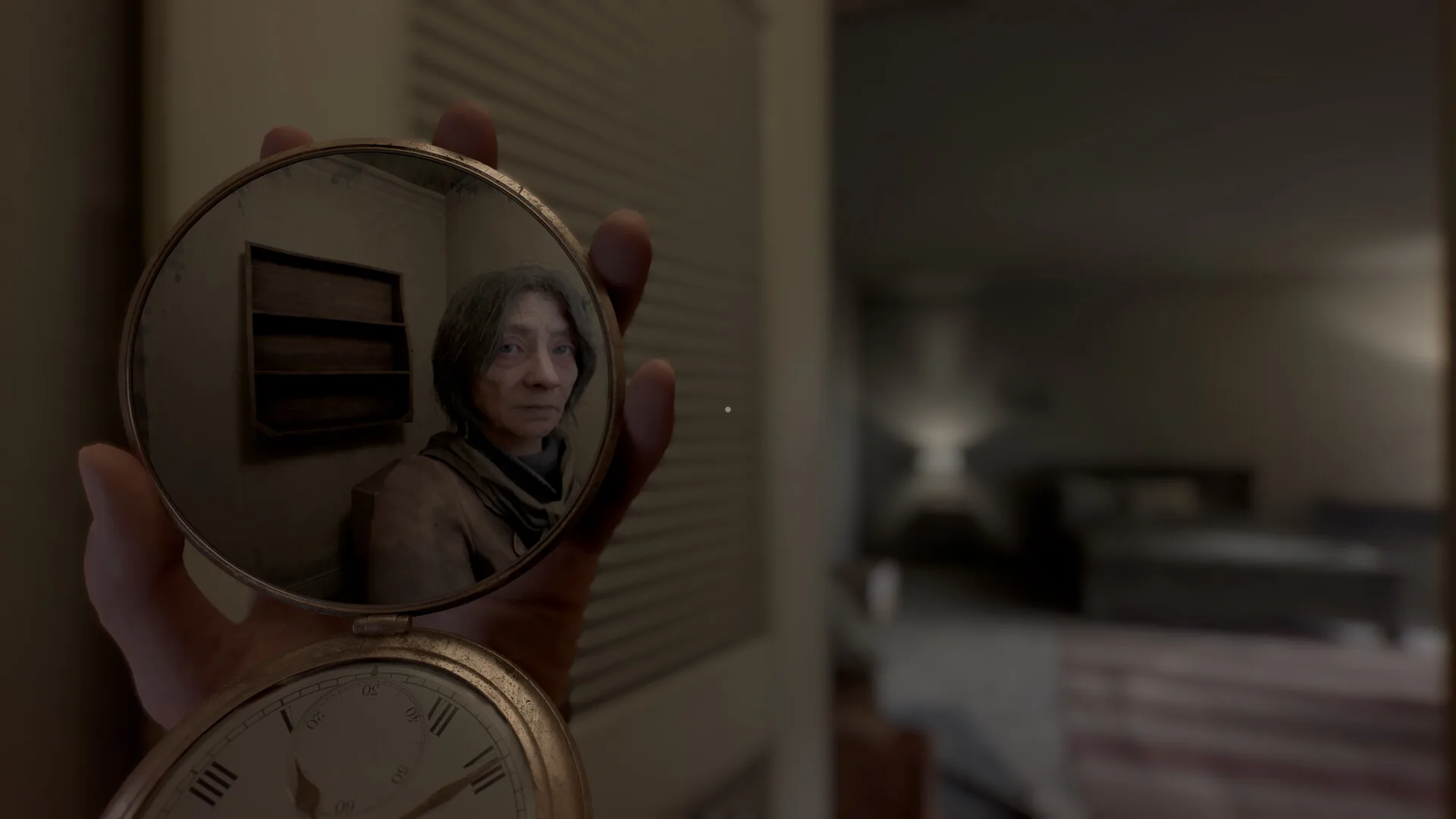
The mirror reveals hidden traces and disturbing reflections that you cannot see with the naked eye. It is an investigative tool, and the developer also describes it as a potential threat.
For preparation, the useful habit is to compare what appears in the reflection with what you can normally see. The announced mechanic makes that difference meaningful: the mirror exposes otherwise unseen information inside the house. That supports careful observation, but it does not establish a universal solution for every puzzle or encounter.
There is a concrete input clarification for the early Windows demo. In Duck Reaction’s itch.io comments, Simon explains that players must hold the mouse button to use the mirror. Clicking briefly can make the mirror’s sound play without bringing the mirror into view.
That clarification came after Lux Noire described hearing the sound while being unable to see the mirror. In the same itch.io thread, Lux Noire later confirmed that holding the button made it work. If you encounter that specific behavior in the early demo, check the hold input before treating it as a graphics problem.
Simon also says in that thread that the game can develop bugs below 30 FPS. This is troubleshooting advice for the early build discussed there, rather than a performance benchmark for the finished game. The mouse instruction likewise does not establish a PlayStation or Xbox button mapping.
Player impressions highlight how the tool contributes to the horror. In the itch.io comments, Bobe-wan praises the apparitions appearing in the mirror and describes the demo’s atmosphere as resembling a ghost film. Bobe-wan also singles out its scares for working without cheap sound stings. Those impressions concern the early Windows demo; the final game can differ.
What happens when you close your eyes, and can you fight back?
Closing your eyes makes you rely on altered sounds and distant whispers to navigate, while leaving your character vulnerable; when a threat reveals itself, you cannot fight back.
The listening ability changes how you gather information. With vision removed, sound becomes the guide through the surrounding space. Duck Reaction presents this as a deliberate trade-off: hearing the beyond can help you find your way, but using the ability exposes the medium to danger.
This makes audio part of the investigation itself. Quiet whispers and altered sounds carry navigational information, so they deserve attention alongside visible environmental details. The description does not give an eye-closing button, a safe duration, or a timing rule for encounters.
Bobe-wan’s impressions in the itch.io comments specifically praise the different soundscapes heard while the character’s eyes are closed. That response concerns the demo’s sensory effect and helps explain the appeal of the mechanic: changing how you perceive the house can itself become unsettling.
There are no traditional weapons in the publisher’s description. Although Steam describes the mirror and eye-closing ability as your only weapons, their stated functions involve seeing and hearing hidden information. The description explicitly says that fighting back is unavailable when something appears.
Prepare for investigation and vulnerability accordingly. No particular escape route, hiding procedure or enemy counter follows from that description. The house’s reactions and the mirror’s threatening role establish danger, while specific encounter solutions remain outside the announced explanation.
How can you prepare for Perceptum’s horror gameplay?
Prepare by making quiet audio cues audible at a comfortable level, approaching rooms attentively, and allowing yourself a manageable pace through the horror. These suggestions follow the announced mechanics and content warnings; they are preparation advice rather than a tested route through the game.
Before starting, consider these practical steps:
- Set a comfortable audio level. Steam lists Custom Volume Controls and Stereo Sound. The game can include loud or unexpected audio cues, so avoid making the overall volume uncomfortable just to hear whispers.
- Choose a manageable session length. Anticipatory dread is an intentional part of the premise. Give yourself room to stop or take a break if it becomes overwhelming.
- Use small observation goals. Before entering an intimidating space, take a few slow breaths and focus on noticing environmental details. This follows Duck Reaction’s advice to stay calm and pay attention.
- Expect sensory uncertainty. The mirror and listening ability reveal different kinds of information. Prepare to examine reflections and listen closely instead of expecting ordinary sight to explain everything.
- Observe the content warnings. The developer identifies intense horror, disturbing imagery, jumpscares, flashing lights and rapidly changing images. Its warning says to discontinue play if you experience dizziness, nausea, eye strain, loss of awareness or other discomfort.
Steam lists Single-player. Online co-op, split-screen, cooperative player limits and crossplay are unconfirmed on that page, so preparation should not assume another player can accompany you through the house.
As of November 23, 2026, the full game is not yet available on Steam, which lists a planned release year of 2027 and offers playtest sign-up. Duck Reaction’s August 25 announcement gives a more specific Spring 2027 window; its November 20 announcement schedules a public Steam demo for December 15.
You can also try the separate early Windows demo on Duck Reaction’s itch.io page. It describes around 20 minutes of content and offers a name-your-own-price download behind an 18+ age gate. Eligible players can select Download Now to access the listed Perceptum Win64 external download. That early demo is the relevant version for the mouse-button clarification above.
Related Guides
Demo Impressions: What Previews Actually Say
ScreenRant praises Perceptum's mirror tension; PlayFront questions variety across the full game.
Horror Warnings and Comfort Options
Steam lists play without timed input, but does not confirm flash or jumpscare disable settings.
Multiplayer and Crossplay Status
Steam lists Perceptum as single-player, with no confirmed co-op mode or multiplayer joining procedure.